
Why Do New V-Belts Fail Quickly? Check Pulley Groove Wear Before Replacement
Why Do New V-Belts Fail Quickly? Check Pulley Groove Wear Before Replacement
—— 2026/07/17 ——
In industrial equipment maintenance, many companies face the same problem:
Newly replaced V-Belts may soon experience slipping, noise, overheating, edge wear and reduced service life.
Many purchasers or maintenance teams first think:
“Is the belt quality poor?”
However, rapid failure of a new belt is not always caused by the belt itself. Worn pulley grooves are often one of the hidden causes.
Therefore, before replacing a new belt, it is important to check not only the belt condition but also whether the pulley grooves meet the operating standards.
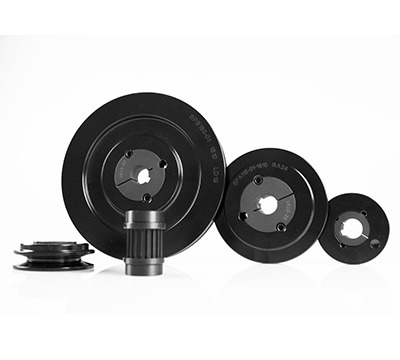
Pulley Wear May Be the Real Cause of New Belt Failure
V-Belts transmit power through friction and wedging action between the belt sides and pulley groove walls. When the pulley is in good condition, the belt fits correctly into the groove, maintaining proper contact for stable power transmission and reducing slipping and heat generation.
However, during long-term operation, pulley grooves gradually wear. The wear rate increases further in continuous operation, heavy-load applications, agricultural machinery, fan and compressor systems, conveyor equipment and dusty environments.
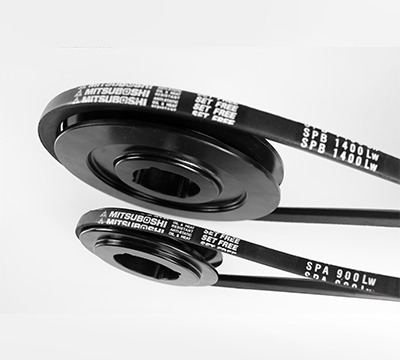
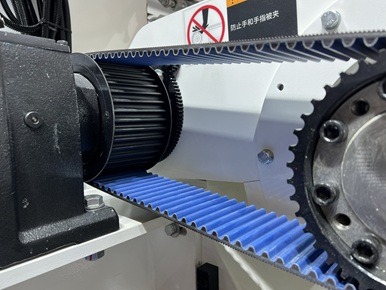
1. What Problems Can Pulley Groove Wear Cause?
| Belt position drops, Causing insufficient contact | Belt starts slipping and generates heat |
|---|---|
|
Reduced side contact area;
Lower friction force;
Reduced power transmission efficiency |
Rubber ageing;
Cord fatigue;
Belt cracking |
2. A Simple Tool to Quickly Check Whether a Pulley Needs Replacement
Many maintenance technicians inspect pulleys only by visual checking.
But the problem is:
Minor groove angle changes are usually difficult to detect by eye.
The pulley may appear usable, but in reality:
Groove angle has changed
Groove width has increased
The belt can no longer engage correctly
At this point, a simple inspection tool can help quickly determine the condition: V-Belt Pulley Groove Gauge
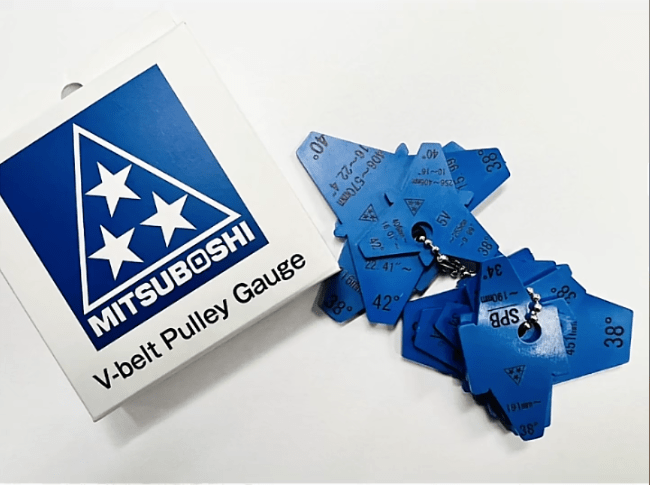
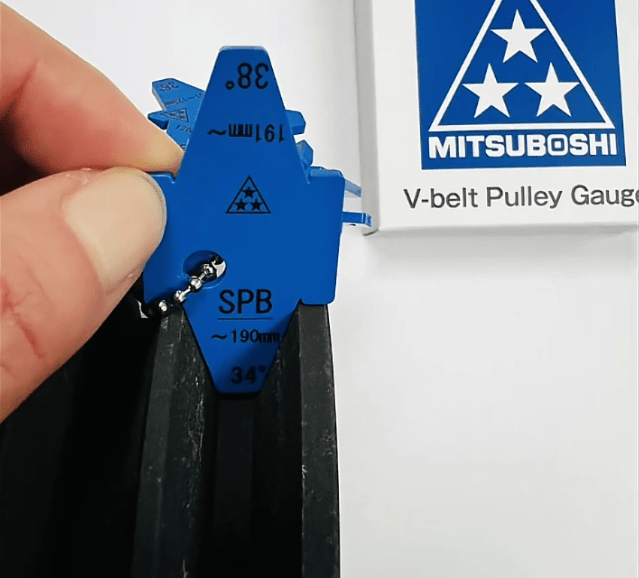
This compact inspection tool is mainly used to check pulley groove angle, groove wear level and belt seating depth, helping determine whether the pulley meets operating standards.
During inspection, simply place the gauge into the pulley groove and compare it with the standard size to determine whether the pulley has exceeded the allowable wear limit.
Compared with repeatedly replacing belts, waiting for equipment failure and accepting downtime losses, early pulley inspection is a more economical and effective maintenance method.
3. Why Can a Low-Cost Inspection Tool Save Thousands in Maintenance Costs?
Many companies follow this maintenance process:

If the root cause is pulley wear, replacing new belts repeatedly will not truly solve the problem.
Through a simple pulley groove angle inspection, you can determine in advance whether the pulley needs replacement and whether the new belt can achieve its expected service life.
For industrial equipment, avoiding the cost of one unplanned shutdown is often more important than saving the cost of one belt.
4. Besides Pulley Wear, What Else Should Be Checked?
Although pulley wear is a common cause, complete V-Belt maintenance should also include:
| Is the Belt Tension Correct? | Is the Pulley Properly Aligned? | Is the Correct Belt Model Selected? |
|---|---|---|
|
① Belt tension too loose:
Slipping /
Overheating /
Power loss /
Abnormal noise. |
① Pulley misalignment:
Uneven side wear /
Belt tracking problems /
Increased vibration. |
① Different equipment requires matching:
Belt Profile, Belt Length, Operating Speed,
Load Requirement |
|
② Belt tension too tight:
Increased bearing load /
Higher motor shaft pressure /
Reduced equipment service life. |
② When installing a new belt, also check:
Parallel alignment,
Angle alignment,
Shaft position. |
② Incorrect belt selection:
Improper installation,
Insufficient load capacity,
Premature failure. |
Checklist Before Replacing V-Belts
✅ Check the cause of old belt failure
✅ Use a groove gauge to inspect pulley wear
✅ Confirm pulley grooves meet standards
✅ Check pulley alignment
✅ Adjust correct belt tension
✅ Confirm the belt model matches the equipment
Need the right industrial belt? Explore our V-Belt range or contact GM Belting for expert selection, application support and maintenance advice.
FAQs
Why do new V-belts fail quickly?
New V-belts often fail because of worn pulley grooves, incorrect tension or pulley misalignment—not the belt itself. Always inspect the pulley before replacing the belt.
How do I check if a V-belt pulley is worn?
Use a V-belt pulley groove gauge to check the groove angle and wear. If the pulley exceeds the recommended tolerance, it should be replaced to prevent premature belt failure.
What industrial belt brands does GM Belting supply?
GM Belting supplies Mitsuboshi, Gates, Optibelt, Continental, Nitta, Habasit, Megadyne and Forbo belts. With 30+ years of experience, Australian stock and local support.
Custom EPDM Belts Products & Solutions, Welcome Your Enquiry.
Work with us
© G&M AU PTY LTD
|
ABN: 85 666 181 424
|
Email: xinlylee@gmbelting.com.au
|
Mobile: +61 498 861 068